Showing posts with label rugby. Show all posts

Friday, December 18, 2015

Developing and Protecting Your Team's Image


 We are in a tug of war battle with our traditions and our newly found acceptance with the general public. In the 'old days' we were a fringe sport played mostly by a motley group of characters and funny talkers from all walks of life. We toiled away on fields outside cities with only a few close friends and family members as spectators. Rugby and the general public only mixed at socials and often was met by equal parts amusement and that feeling you get when you pass a car wreck and can't look away. We were an early version of extreme athletes and we lived our lives that way. Now, teams have large corporations as sponsors, our college rugby has TV time, and in some cases TV money, and the youth game is exploding with parents choosing it over football. All of this is causing the traditions us old boys enjoyed to be scrubbed from our sport and replaced with a sterile 'professional' environment. Heck, even our songs aren't safe!

Good.

Now, I don't want to see the entire social aspect of rugby wiped away because it is as important to the game as the ball we play with. It's what separates and makes us better people than football and soccer players. We are a united band of brothers and sisters who battle against each other for 80 minutes and then celebrate the effort put forth by everyone after regardless of team affiliation. But we have to be honest with ourselves now, our traditions are our hurting us.

We are at a critical point in our development as a rugby nation. Our national teams are starting to produce talent and wins, clubs are aligning themselves for a possible jump to a pro operation and the college game is the strongest and most marketable it has ever been. As the spotlight of the general public interest begins to acknowledge and accept our sport we need to be conscious of our image and how we as athletes, coaches and administrators are perceived by outsiders while we are in the glare of that light. This is the most important part of that last sentence and what this blog is about:

WE HAVE TO BE CONSCIOUS OF OUR IMAGE

For me personally, it is one of my greatest fears to be a head coach of a college program left to answer questions for actions and negative consequences of a decision making process I was not involved in. I have watched from a distance learning, both what and what not to do, as other coaches have gone through the process of defending their sports, culture and players against the stigma that Delaware 'I'm schmacked' party or the Virginia Tech hazing suspension,  but I have had experiences with minor incidences and many close calls on bigger issues. It is my hope the content that you read below can save you, or a the very least help you manage, a  PR nightmare.


Let us start by debunking some common phrases used by players (even some coaches) to justify questionable actions:

"I pay dues, I can do what I want"- I'm going to stop you right there. No you can't 'do what you want'. With that logic you should be able to stop an officer from giving you a ticket because you pay your taxes (those are your dues to be an American) and those taxes pay that officer's wages. Sounds pretty stupid right? That is what you sound like when you say it. When you pay your dues you are entering into a social contract to conduct yourself within the standard set by your team. These standards should be explained to you (or better yet, presented in a handbook and/or displayed around your club) when you join the team. It's often why clubs allow you to play a few games before you pay anything, so you understand what their expectations are. Just because you pay into a program doesn't mean you can disgrace it, that isn't doing what you want but in fact its you being an asshole and hurting the reputation of an organization that was there before you and will be there after.

"It was us as individuals, not a team thing."- One of the great things about team sports is the idea of surrendering the 'I' for the betterment of the 'We'. Now, while you are out in public by yourself you are John or Jane Doe and an individual but the instant that you are joined by a team mate you give up that individual identity and become a group with an identity found by a common interest, in this case rugby. People call this association. So, when you two posed for a calendar, host a party, steal something, etc and then attempt to excuse your actions as not being a 'rugby thing' your common link of being team mates will ALWAYS make it a rugby thing despite your best efforts to justify it otherwise. You don't believe me? Why don't you ask the Minnesota Vikings PR department if they enjoy the association to the Love Boat Scandal or the Caroline Panthers being associated to Greg Hardy's domestic abuse case. The proof that association is a thing is literally in the headlines. This childish, immature thought process is more often than not the reason for stupid things happening.

"It is tradition"- Look at your Facebook news feed. Do you notice anything? I do, puppy and baby pictures have been replaced by people using social media as a megaphone to tell you what they are offended by. These people are your friends who you share some kind of positive connection with. Now think about your team's traditions, would they offend your friends? How about your parents? If the school found out how would they respond? Has this tradition got your team into hot water before?
If you answered yes to even one of those is that tradition a benefit to your team culture or a danger to it? The great thing about traditions are they are only as long lasting as your team's collective memory so they can be changed. "It's tradition" is the sport equivalent of "We've always done it this way" in the business world. If you believe that both of those statements justify not changing a dangerous or poor practice then you're going to lose more than just that one 'tradition'.


I would encourage you to talk to your leaders, captains, and entire team about these sayings. Trust me, I've heard all of these as justification for an action and once that person did some self exploration they realized that those statements are just away to pretend they aren't guilty of some kind of wrong doing. Create an up-front contact with them that saying these 3 phrases isn't OK and if anyone says them it should be discussed further if it is in fact going to hurt your club.


Now let's look at some preventive measures:

Find an ally within an institution- We as rugby people have a belief that it is "us v them". You see/hear it all the time "The school hates us.." or "We aren't looked at as a serious team because...". While I understand in most cases the people saying these phrases aren't the cause for the poor perception and you shouldn't accept this as a problem you created, but instead as a mean to the solution. You, as the coach, can be the school's best resource to help them avoid a PR nightmare and you need to sell yourself as such. A simple E-mail introduction of yourself, acknowledgement of previous problems, your solutions on how to fix them and an olive branch of an offer to  be partners in helping develop these young men and keep them out of trouble can go a long way. Find out who your players answer to and that is the person you should be contacting.

A coach is always under the scrutiny of association- This one I've learned the hard way. As coaches, our actions are always going to be under a microscope regardless if we are on the sidelines or in a bar with our buddies. When you become a coach you give up that individual title and become apart of the organization you work for. I'm no longer just 'Brandon Sparks' but I'm Brandon Sparks, head coach of University of Michigan'. I know the standards set by the university and I hold myself accountable to them the same way a varsity coach would. Why? Because, I don't want to embarrass my team, myself, or my family and I sure don't want to play into the stereotypical image of the rugby culture. I also want to be a role model for my players because it sends a poor message to be the coach that doesn't practice what he preaches.

Create a social media policy- The world is incredibly smaller than it was 10 years ago with things like Instagram, SnapChat, Twitter, Facebook, etc. We as coaches are faced with problems our coaches would have never thought of by dealing with technology we barely understand. These outlets are also where many problems arise from. Below is a practice I've taken from the business world and applied to teams I work with, a social media policy:
Players often don't understand the danger social media presents to themselves and their squad. This simple one page documents sets out a guideline to help protect the image of your club. To help with the buy-in rate encourage them to be a part of the set-up. Also, encourage an open discussion with them about positive and negative effects that social media can have on your team.


Be a sounding board for your team- We know that these kids aren't perfect and they are going to make mistakes, heck we have made plenty ourselves when we were that age. We also might have be involved in an incident that hurt our own rugby club. Don't be afraid to share those experiences and invite players to talk to you about possible decisions that could hurt their club. Good leaders are easy to relate with and approachable, but you need to show that side to your players first. They should also remember that the decisions they make away from you also directly affects your image.

I know in my own situations this is a tough issue to control. Emotionally I'm torn because of the nostalgic emotions that are created by my memories of my playing days but on the flip side as a professional coach I understand the changes that must occur in not just my own thinking but ours as a whole rugby community to progress this game. Do you agree with the ideas I shared? Do you have one of your own that I missed? Please share because

Thursday, September 24, 2015

5 Things I Learned Inside a High Performance Enviroment


This past summer was spent traveling to one high performance camp to another for USA Rugby. This is now my third year in side the HP Program so I'm starting to feel I've become a seasoned pro at sleeping on dorm style twin beds, over-eating cafeteria food, and adapting to coaching in this unique environment. Below are five things I've learned in my experience of being an assistant coach at these events as well as being a head coach of an age grade program. I've taken these lessons and applied them to my current coaching position which has made for a positive experience for everyone involved. 

Do you agree with me? What have you learned? Please take the time to comment below...

1. People love meetings, but you don't have to love them
If you've worked in a professional environment you no doubt have been stuck in a room with a whiteboard asking yourself why couldn't we have just written an E-mail about this? 


We've been there bro...
Rugby suffers from this same abuse of meetings too.

What I learned was less is more when you're thinking about holding a meeting.

You can cut out a lot of leg work in your build-up to an event with presentations or well written emails. This serves two purposes; 1. It cuts out your needed meeting time and work to be done on the ground, 2. Once you ask the first question you will know immediately who has done their homework and shown up prepared.

Now, I'm not saying ALL meetings should be done away with I'm just saying most of them should be.

Acceptable Meetings:
- Med check
- Selection
- Pre/post game coaches talk
- 1 on 1's
- Morning team meetings to outline agendas

Unacceptable Meetings:
- Meetings to plan PowerPoint's
- Meetings to plan future meetings
- Any meeting longer than an hour
- A meeting without an agenda and set start and end time
- 'Group-think' meetings

A final note on meetings, make sure if you're the one running the meeting you aren't wasting your time or the participants. You wouldn't go to practice without a plan so why should you go to a meeting without one? Respect yours and others time. Be quick, direct, and prompt.
100% right


2. Trust your assistant coaches

If you are assigned to, or assigned, a group of coaches you need to trust them and their abilities. They, just like you, are there for reason and you need to get comfortable with the idea of prioritizing and delegating to free up your time to focus on what is important. You want to be a leader not a boss give them the room to coach to their strengths (maybe your weakness) and focus on your role.


Trust them...
Take a second and think about your conduct during a training session, now ask yourself a few questions; 

1. If you aren't the lead coach during an activity, who is? 
2. How often do you add "and another thing..." after they are done giving their coaching points? 
3. When they present something to you do you often add "Well, this is how I do it.." without asking why they want to do it their way?

If you can answer yes to 2 or more of those questions you might be undermining your assistant coaches authority with the team. That doesn't mean you should let the pirates sail the ship, but be tactful on how you approach the subject of skill improvement with them and do it AWAY from the team. A simple one on one meeting to discuss your expectations will do more for the coaches development, and respect from the team, than constantly talking over them in a coaching session.

3. Less is more which also leads to less stress
This is less equals more for the math challenged
This is particularly important in an HP environment. You're not with your club team anymore where you have to spend hours hammering away at the fundamentals and game understanding. These athletes that are either on the team or at a camp already have a strong grasp on their fundamentals and game situations so instead turn your focus to improving the individual skills (before and during training, never after) and stretching your own understanding and expectations of the game for both coaches and players.

You are dealing with the 1% in terms of athletic ability, try something new with that will challenge their abilities and stretch the limits of your system.

4. Speak less, listen more
This is especially important during meeting with other coaches. You are surrounded by some of the best minds in the game and their collective knowledge is greater than any website, YouTube clip, or book.

So shut up and listen.


You don't need to prove you belong by yammering on or tacking on comments after a point has been made. What you need to do is take notes about what other people are doing on topics that will make you and your club better. opportunities like these to learn don't happen very often, seize it by shutting your mouth and opening your ears.


5. Prepare for some haters and trolls
One thing I wasn't prepared for when I was the interim head coach for the 7s program was the backlash from trolls on the internet.  What really pissed me off was it came from some people I
Mouth breathing is one sign of troll-ism
consider friends and role models.

The lesson I took away is you need to have thick skin to coach at any level, but you need to have tank armor thick skin when you get to the next level of coaching. People are entitled to their opinions, but you need to understand that those opinions are made up from snapshots (games/press releases on selections/etc) taken from one brief moment in a very long process only you, the staff and team have experienced. 

Have faith in what you're doing and don't be afraid of possible failure. You're in that position for a reason so act like it. Find a someone who will keep you grounded and remind you in those moments of weakness that you are capable of doing it and LISTEN to them. In the end the worst that could happen is you're bad at it, which will only serve a greater purpose of teaching you what you need to improve on.

Last piece of advice on this topic, like and re-tweet every post about you...


Saturday, July 11, 2015

Thriller Hands!!! A Dynamic Way to Receive a Pass

The Overview:

Exhibit A
What does the 1982 hit "Thriller" and catching a rugby ball have in common. Its all about the layered hands or, the thiller hands! One of the most iconic moments in the music video is when MJ and his zombie dancers throw their hands out to the side and shimmy to the left before coming back to right, here. This small movement in a very large video gives you the tools to help explain the concept of layered hands while receiving a pass by giving the technique a pop culture reference.  The pop culture reference is important because it breaks up the normal pattern of learning by adding entertainment value which will help with skill retention. 


Exhibit B
Exhibit C
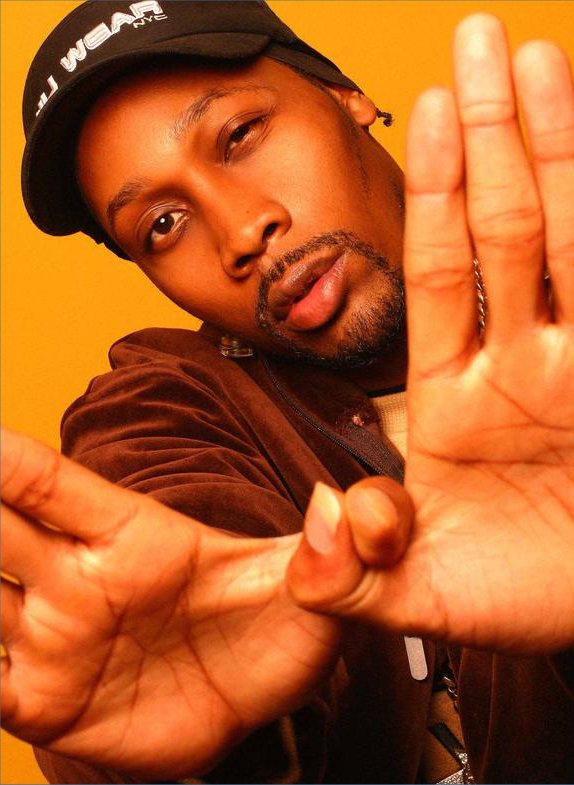
This isn't the only way to catch a pass either, its just another way. The old tried and true methods like the 'W', as illustrated by RZA from the Wu-Tang Clan here, or the 'Diamond" as shown by pro wrestler turned master yogi Diamond Dallas Page. Both of these techniques still have a place in the game, especially at youth level, and should be coached to new players and practiced until mastered. The thriller hands are great for experience players who might be hitting a plateau in their development or for back line players who's attack systems are designed around getting the ball out fast. It should be taught to the whole squad as well since it will help forwards who find themselves in space to become more of a threat. Regardless of how you coach it just make sure you're coaching it. To many of us focus on passing the ball and pay very little attention to the process of catching it.

The Goal:

Create a quick transferable ball by positioning hands to make a pass before the reception.

The Concept:

The concept behind the thriller hands is to have the player's hands position to quickly receive and distribute the ball without having to waste time re-gripping for proper hand placement. Following the three panel sequence of photos we can break down the process...


***The pass is coming from the photos left side and being passed to the right***

#1- Position your power hand (hand at the back of the ball) in front of the guide hand (hand at the front of the ball). keep them open and pointed towards the player passing the ball.

#2- Catch the ball with your fingertips. The ball should be landing in your hands in such a matter that you should be able to transfer it quickly across the body with minimal hand movement to make the pass. 

#3- You should be transferring the ball  quickly across the body and firing it into a pass with fingers pointed at your target.

Looking at the hands from the passer perspective

Focus on these key factors:

Izzy's thriller hands
1. Are the catching the ball and bringing it straight across the body? No dip?

2. How much is the ball moving in the transfer? Are they struggling to get a handle on it?

3. Are the passing leaving their hands ugly? If so, it could be a problem in their passing process.

There is tons of room in how you want to coach this to your players. Don't move on until they have mastered those 3 key area and once they do start looking at moving the back hand closer/farther. Also, what should the feet be doing? How about the eyes immediately after the catch? 

What do you think about the thriller hands? Will it help or hurt your players? I would love to hear your comments below.

Friday, June 26, 2015

Continuous Passing

*This drill is designed to be a skill developer and/or a assessment tool*

Preview:
This activity is designed to help develop varying passing skills during fatigue state.

Coaching Points:
- Fundamental passing technique 
- Footwork
- Receiving hands (both passer and receivers)
- Smart communication

Needs:
- 3 players
- 4 cones
- 1 ball
- Timer

Set-up:
- The vertical cones (running cones) should be spaced 10-15m apart
- Cones making up the horizontal line (passing cones) should be offset so one is 5m from the running cones while the other is 10-15m depending on skill level
- Place on player on each of the passing cones to be passer/receiver
- One player running between the running cones

Action:
- Designate time (i.e. 1-2 minute each player)
- One player works between the two running cones at pace
- 2 players work the short and long pass to runner


Adjustments/build-up:
- Receivers on passing cones have to do burpees, sit-ups, etc
- Lengthen running line and add more passing cones


Friday, June 19, 2015

Defining Role Responsibility and Time Truths as a Specialist Coach


This essay is a reflection back on the time spent in USA Rugby’s Elite Coach Development Program (ECDP) and two lessons I took away from the week long National All Star Camp (NASC) that helped develop me as both a head coach and assistant coach.


Since England and Clive Woodward won the 2003 world cup specialized coaches have become commonplace on club and international staffs. The days of 2-3 coaches operating in the traditional head coach, forward coach, and backs coach role are quickly disappearing in favor of 5-6 coaches with new titles like skills coach, point of contact coach, or attack coach. In this essay I will share with you two personal learning experiences of mine as a  specialist coach. These two experiences will focus on the need for clearly defined roles and the issue of time management when coaching a specialty area. These areas are often points of contention on my own staff as well as others around the world and it is my hope that my experience can help others with the same issues.


 I entered the 2015 NASC camp in a familiar role as assistant coach. For the previous two years I found myself working with the backline for the CAAs and again would be filling the role for one of the two college teams at this camp. An added bonus this year was I would be tasked with coaching the attack for the squad making this my specialist area. As I mentioned above the two learning experiences that I would like to share will focus around my role as the attack coach and the need for time management and defined roles by using my background in both business and rugby.


What’s my job as the attack coach?
How would you define it as besides making sure the team scores enough to win? What responsibilities are associated with it? These are all questions I had for myself. The learning experience here is the same lesson I had when I was hiring employees for a company, the need for a job description. Just like you wouldn't take a job without knowing your responsibilities so why should you coach something without knowing your parameters? A job description for a specialist coach should be an up-front contract and cover 5 key elements;


  1. The purpose of the position
  2. Expected outcomes of the role
  3. What input the other support staff will have in systems, patterns, etc.
  4. Expected time and tools to perform role
  5. How much input will be given by the head coach


By creating a description of the specialist coach role you are giving you and your staff a point of reference to work from on any decision that will need to be made now or in the future. These should also be flexible so it can change with the game and your staff and constantly be reviewed.


The Time Truth of a Specialist Coach


As a specialist coach you should always remember two time truths:


  1. 'scrum better!'
    Time is irreplaceable. We never make it back once it is gone.
  2. Time is measureable . Everybody has the same amount of time… peasant or king. Its not how much time you have it is how much time you use.


When you’re a specialist coach you have block of time to deliver a message, develop a skill, and execute it in a game situation that will carry over into a competition. With that title of specialist comes a certain level of pressure of being the expert and an over inflated sense of self worth that if you don’t reach your outcomes the team won’t perform. Because of those two factors we make the mistake of trying to do too much in one session which leads to either completing some of the outcome or completing nothing because of over explanation and not enough reps. This is a violation of time truth #2. Once this happen we fall into the cycle of moving things around in a later session to accommodate what missed and this violates time truth #1.


I made the same mistake the past two years in my preparation for these camps. I decide that I would reinvent how teams can score a try with elaborate systems and patterns. Then I arrive, look at a roster, and I’m reminded that this is an ever changing team with different names, skills, and experience levels. This year, I changed my approach by focusing on a process that is broken down into three areas.


  1. Assess the squad- I was successful in this by putting them into common rugby scenarios (i.e. 2v1, 2v1 with support, etc) and watching their skills while only giving small coaching points. The outcome was simple, we wanted to see what they were good at.
  2. Identify the strength and then build around it- We immediately ID’d that we were good with ball in hand so we started to build an attack structure around moving the point of contact and working to keep the ball alive.
  3. Keep it simple- We had hard runners in the middle and speed on the outside. Instead of 5 elaborate but poorly executed starter moves we went with 2 simple starter moves that we focused on executing perfectly.


I made sure to hold myself to this three step process for every training and it had a direct effect on the time managment of that session. We would assess what we had done the previous session, build on it in the current session, and keep it simple by not over burden ourselves with unnecessary scenarios or instructions . I also worked to avoid the rabbit hole of coaching skills during team attack time. Often players won’t struggle with the concept of a pattern but will lack the skill to perform it. In the past I’ve been bogged down by this, using up precious time to coach a skill when I should’ve shelved it to work on with the individual player before or after training.


There is no one right way to manage your time but as you are planning a session or even performing a session ask yourself if you are respect the time truths. By doing that you are being an effective coach and not taking time away from other areas of the game.

At the end of the day these are just two personal lessons I've taken away from my time as a specialty coach. As these positions grow and become commonplace within the structure of a team we, as a coach community, have to make sure we develop with them. It is as simple as of respecting our personal time, our staff’s time and our team’s time by establishing and honoring our responsibility. While some of us might never have the staff of Clive Woodward we can still work to delegate portions of the game to worthy coaches.

Saturday, December 6, 2014

40 Questions for 1 on 1 Sessions

We are just wrapping up the season here and the final step to putting 2014 to rest was the full team 1 on 1 conversations. I try to stay away from words like 'assesment' or 'evaluation' simple because I want it to be a conversation about the season, both good and bad, and those words often carry negative associations when attached to any meeting.

It is often hard to start conversations with players, especially some younger college players, because they view you as an authority figure no different than a teacher or parent. So, you simple get answers like 'it was fun', 'yep', or my favorite 'No, we did everything good/perfect'. This is an evasion tactic to avoid answering hard questions or addressing subjects some players think will upset you (I did it with parents and coaches when I was that age too). So, if you're truly invest in improving as a coach and team you need to hear what they have to say and how to get it out of them. They know the social dynamics, personal and team struggles that we as coaches aren't privileged to and can give us an honest view of ourselves as leaders and our systems as they pertain to the team that uses them.

Below are some tips and forty questions that will help you start the conversation with your players. I hope you find them as helpful as I did when using them.

3 Tips:
1. Shut your mouth and open your ears- Its a common problem in any conversation, people listen but don't hear what is being said. What does that mean? We love to sound smart and polished, so we often are thinking of our witty response as someone is speaking to us. Important nuggets of information go unnoticed and chances for you to ask a question, that might open the mysterious black box of your player, are missed. So, listen to what they are saying and then think of your response to when they just shared with you. Yeah, about that response...

2. Ask the 'W's' often- Who, What, Why, When, Where and hoW. Overuse 'why' and 'how' too. Questions like "What was your best game?" are easy to answer but the follow up of why or how will give you an insight to the process that lead to the positive result, and that is what you should be looking for.

3. Leave the ego at home- We coaches are a narcissistic bunch by nature. We are as good as our ego lets us believe and its not a bad thing, most of the time. But, during these sessions you need to check yourself and that ego because your players need to trust you to say what they feel.
Will you also agree with it? Hell no.
Will it sometimes hurt your feelings? Yep.
But at the end of the day this is how your players feel about you. They are entitled to those feelings and if they have something to say you better dang sure listen. Nothing can be more destructive then trying to argue your point about their view on something. So shut up, write it down, and move on. Than listen to what other players say, are they giving you the same feedback? If that is a yes, you might have found what you were looking for, a way to be better.

Here are my Top 40 questions:
1. What was one of your “worst” games this year? Why?
2. What was one of your “best” games this year? Why?
3. What has been one of your biggest disappointments as a rugby player?
4. What has been one of your greatest accomplishment as a rugby player?
5. What has been one of the best teams you have been on and why?
6. What has been one of the worst teams you have been on and why?
7. What has been a hardship in your life?
8. Who is a “hero” in your life and why?
9. What has been one of your greatest disappointments? What was the best team you have been on?
10. What was the most lopsided loss?
11. What was the most lopsided win?
12. If you didn’t come to rugby, where would you be?
13. When are you the most nervous while you are competing?
14. How do you tend to workout/train when by yourself?
15. In your family, who “likes” your sport the most? Why?
16. What other sport would you like to compete in if you were not playing rugby?
17. If you could be the head coach of a team for a year, what would you change?
18. What is something that is unique about rugby?
19. What is difficult about rugby?
20. What is satisfying about rugby?
21. What is the most challenging thing for you to do in rugby?
22. What was the scariest thing you have had to do? Are you glad you did it?
23. What was the last thing you saw someone do that really impressed you?
24. What is your favorite hobby? Why?
25. What are you goals for the winter?
26. Did you fill out the coach survey?
27. What are your goals for next spring? 7s? Developmental 15?
28. How do you communicate best with people? Them with you?
29. Are you considering running for an officer position? Which one?
30. How do you plan to help progress your club this year?
31. What Position do you want to play? Why?
32. Favorite thing we do at training? The least?
33. Giving your commitment level, what can we do better as coaches to help you stay engaged?
34. Do you want to play representative rugby?
35. Are you going to keep playing when you leave school?
36. Do we honor the tradition of (Club Name)? How?
37. How can we honor the tradition better?
38. Toughest player on the team? Why?
39. What are you doing to work on your mental game?
40. Are you having fun?

Did I miss one? Share it in the comments.

See you pitchside,

Tuesday, September 30, 2014

Basic Drill of the Week: Open the Hips


***Sorry our post have been so spotty lately, we are in season at the moment***

This is a quick, easy options for teaching players how to open the hips. You are giving them a physical reaction to what it feels like to have proper footwork while passing. I've used this with both pops and spin passes and can be adjusted to fit your style of coaching those techniques.

Needs:
- 2 cones
- 2 balls
- 2 players

Set-up:
- 2 cones set-up 5-8m apart
- 1 ball sitting on the ground at the farthest cone 

Action: 
- Two players, one with the ball the other in support, releases from the near cone
- The ball carrier looks to open his hips with a step towards the support with his lead foot (passing left, his left foot would be his lead)
- Ball Carrier's back foot (i.e. passing left, his right foot would be the back) should come around to nudge the ball on the ground. This completes the opening of the hips.

Adjustments/Build-up:
- You can start without the ball on the ground to highlight players passing over their thigh and poor footwork.
- Make sure you have players work on passing from both sides of the cone, so they work both hands.
- Build-up to ball carrier and support player attacking a defender to see skill in game situations. 


Friday, August 22, 2014

Basic Drill of the Week: Depth Square

No matter the level you coach, you have had to battle the issue of depth with your attacking team. Below is a simple fundamental drill that you will find useful called, the depth square.

Needs:
- 4 cones (possibly more if you want to build lanes)
- 1 ball per group

Set-up:
- The square grid should be 25m x 25m.
- Up to 6 attackers on the outside of one edge.

Action:
- First player, with ball in hand, starts by making a pass, at depth, to support.
- Support works to get the ball through all 6 set of hands before breaking the line of the square.
- Once at the other edge players move around the cone and realign in an attacking line.
- Repeat passing on remaining 3 sides of the square.

Key Factors:
- Realignment at depth
- Fast hands
- Travel off the ball: looking over your shoulder, communicating
- Running straight (don't chew up supporting attackers space)


Build-up:
- Add extra cones at square's edge to create running 'lanes' to ensure straight running.
- Put defenders in the middle and allow group to attack into the grid.
- Race by starting multiple grids at the same time.

Friday, August 8, 2014

Must Read Books For Any Coach


A few years ago on a far more unsuccessful blog I wrote up a list of books every coach and player should read. As I'm about to set out on a new challenge in my life I revisited that list a few days ago to take stock and refresh any old ideas it might give me. This started a series of events that pretty much lead to me taking a complete inventory of my leadership books, ideas, fundamental ideas and rehashing things I had learned in the past from some of my favorites. I tell you all of that to give you a new updated version of that list below. These are only ten but could have easily been twenty. But, like a good magician you never show the best tricks. Enjoy and please let me know what you think in the comment section!

This book came along at an interesting time in my coaching career, and exactly when I needed it. We had several big personalities that continually rocked the team boat and were draining for both me and the squad. Now, while this book can at times be like reading the memoirs of a successful hippie it does give you some nuggets of wisdom. For instance, reading about how he managed Kobe Bryant, Shaq, Michael Jordan and Dennis Rodman will give you some great insight into some tactics you might have never thought of for dealing with unique players that often clash with others. He also brings a much different perspective to coaching than do most. Dare I call it balance between coaching and life that is not often found in our profession. This is worth a read especially if you grew up around the time the bulls were great so you can see how his impact was felt on the organization or if you sometimes feel like traditional coaching books aren't for you.


In my 'real' job I've read or heard about this several times in one way or the other. While reading 'Eleven Rings' by Phil Jackson he referenced it several times through out his stories and how much it helped him organize his championship winning teams.
The book is based on research done on groups of people and how they develop into world class companies or organization. The authors break individuals inside of groups into tiers ranging from good to bad. Each tier has different cues and trends that they make the reader aware of. They also explain how to bring lower tier groups into the higher tiers.
It was interesting after reading it when I went onto the pitch with my team every evening. You could almost physically see these tiers and their lines through the entire squad, which let me know I had some work to do. If you're in the business of building teams give this book a read because it has my strong recommendations.


You ever wonder what makes the All Blacks the All Blacks? How a nation with the same surface area as Oregon can be such a powerhouse in a game like rugby compared to their bigger competition with a much larger selection pool? It comes down to team culture. Author Jim Kerr does an amazing job of pulling the curtain back and revealing the inner workings of a team that has become known for their winning ways. Kerr (and to a certain extent the team) allows the reader a chance to see it wasn't always this way for the team and how management, retired players and current squad members turned it around.

'
Everyone knows (at least you should) the book Total Rugby, 'Think Rugby' is the sequel (if you can call it that) to it. In 'Total Rugby' you get all the pieces to a great rugby machine; in 'Think Rugby' you are given the directions to assemble all those pieces. In true Greenwood fashion things are explained with great detail. He gives you step by step instructions in how to build a playing system and make it work for your team. This isn’t just a book for coaches it should be read by players as well to help give them a deeper understanding of the game.

'

This is the Bible of rugby. Jim Greenwood is responsible for creating the game we play today. He has inspired coaches like Clive Woodward and Eddie Jones with his expansive style and patterns. This book is all about the fundamentals of rugby. It is written with such detail to make sure that all of your questions are answered and nothing is left to chance. Do you want to know why you are missing kicks? This book will help you identify the reason by breaking everything down from what your feet are doing to where your eyes should be looking. This is a must own for all coaches.


Written by Clive Woodward the 2003 world cup winning England coach this is a guide to how he built England into a rugby powerhouse that concluded with them hoisting the cup in 03. His approach was unique in the way that he applied his experience in business management to coaching a rugby team. While you won’t agree with everything he says and does in this book, you will appreciate his forward thinking and organizational skills. If you are serious about the business of coaching rugby I can’t urge you enough to read this.


'
If you’re a bookstore nerd like this guy you probably would have to take off your shoes to count how many John Wooden books you could find in the sports section. But, this one is different. Written near the end of his life, by him and a friend, this book explores his life and coaching philosophies. Wooden wasn’t just a great coach but a great teacher and person, and that is highlighted throughout the chapters. The lessons he shares from his days coaching UCLA basketball (where he won 7 straight national championships) will make you look at how you coach your team. One of the standouts in the book is a poem titled “A Parent Talks to a Child before the First Game” which should be read to every high school and college rugby team.


Think you’re a bad ass? Wait until you read the story about the ultra marathoner who broke his leg, kept running and finished the race! No big deal you say? It was a race from LA to New York. This book goes and gets some of the top athletes and coaches in sports and burrows into their brain to find out what gives them the drive to train, compete, and reach the top of their sport. Don’t confuse this book as something written by a meat head, about meat heads. It packed full of insight into how to train your mind to do what you might not think physically possible. It’s gritty and honest and will force you to look at yourself and your mental make up.

'
Written by Gary Mack a leading sports psychologist who has worked with some of the top athletes and teams in America. The book is made up of 40 lessons and packed with anecdotes of them being put to practice. We all know a friend or player who constantly struggles with the mental side of this sport and this book is written for them. It is a quick, easy read (I got thru it in a cross country plane ride) and enjoyable. Read it and enjoy building your mind gym for a mental edge on your opponent. 


If you’re like me and consider a diet ordering a small Blizzard from Dairy Queen instead of the large this book is for you. If you are like my nutritionist who probably read that last sentenced and slammed her fist on the desk in rage over my dietary ignorance, don’t worry this book is for you too. Packed full of the science of why and how food fuels your rugby body it balances itself out with helpful, easy to read graphs and handy menus (the healthy bar menu is a personal favorite) that anyone can follow. It doesn’t matter if you are a teenager just getting into the game, a college student who plays socially or residing at the OTC this book can help you take care of your body with the fuel it needs.